
Easy to grow plants for beginner gardeners in California
If you're thinking of trying your hand at gardening for the first time in 2026, you might be wondering what plants are easy to grow in California. Which plants do well in our climate and which need more care? In this post I'm going to list three plants that are easy to grow in all of California. All three of these plants require minimal care to be successful, so they're great picks for beginner gardeners.
1. Sunflowers
My first suggestion is sunflowers. Sunflowers are beautiful and iconic all over the world. The bright yellow flower heads look so joyful as they tilt their heads to follow the sun through the sky. They are great accents in any yard, and the seeds are also edible. You can chop the flower head down when the seeds are ready to claim them for yourself, or just leave them there for the squirrels and the birds.
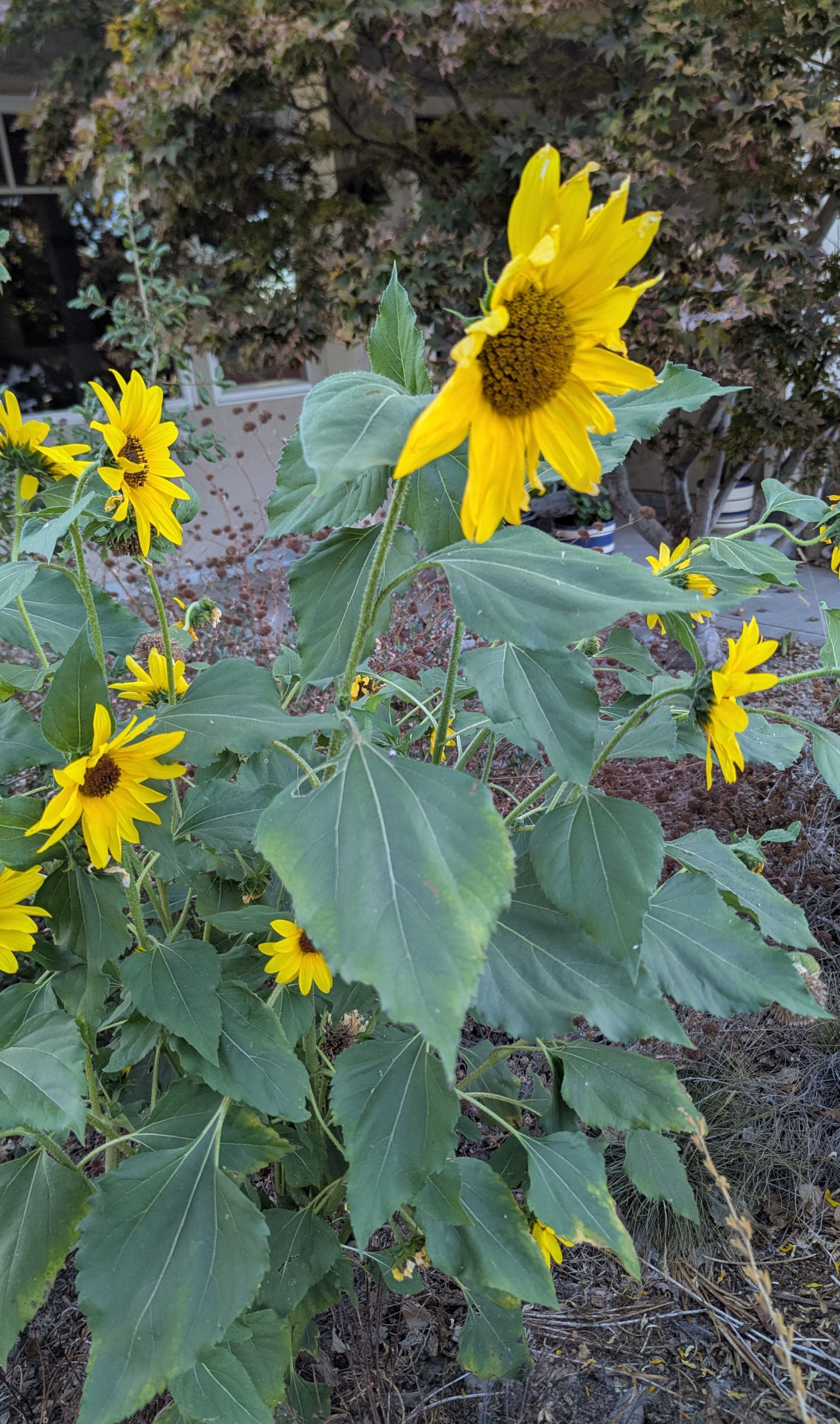
Growing sunflowers in California can be remarkably easy if you start them at the right time. If you start them in winter or early spring, then all you have to do is put the seed about an inch in the ground. When the rain falls it will trigger seed germination and by late spring you will have a beautiful tall sunflower.
If you wait until the rainy season has passed, then you may have to do a little more work. You can put a sunflower seed in some soil in a paper cup. Keep it moist for two weeks or so. When it is about six inches tall, you can transplant it into your yard.
Sunflowers develop thick taproots that gather moisture from deep in the soil, so they don't need much water. You probably want to water them every other day for the first few weeks while they are getting established. Then you can taper off the watering.
If you want to go the extra mile to support local wildlife, then you could even grow our native sunflowers. California Bush Sunflower doesn't grow the giant yellow heads on long green stalks that you see in more common sunflowers. Instead the flowers are about the diameter of an egg, and they grow in a bushy form. California Bush Sunflower makes a great thick hedge, and it blooms nearly all year long.
2. Cherry tomatoes
My second suggestion for a plant that's easy to grow for beginner gardeners in California is cherry tomatoes. Cherry tomatoes are the small, sweet tomatoes that are most often eaten in salads or on skewers. They are so delicious that even my kids pick them straight off the vines and eat them for snacks.
Cherry tomatoes are nice plants for beginners because they are easier to grow than standard full sized tomatoes. They are more disease resistant, they require less water, and they will re-seed themselves year after year.
You can start cherry tomatoes in containers or in the soil. In either case, just make sure to keep the soil moist for two weeks or so to allow the seed to germinate. When you put the plant in the ground, water it every other day until it starts bearing fruit, then you can taper off the water.
All tomatoes are vining plants. For cherry tomatoes, these vines usually form into a tangle that is more or less bush-like in form. These bushes can get quite large if you let them. You should trim them back freely once the bush reaches a size that you like that is over 3-5 feet tall and wide.
3. Blackberries
My third suggestion for a great plant for beginner gardeners in California is blackberries. Blackberries are another fruit that my kids will pick straight off the plant. What is better than seeing your kids eating healthy food out of the garden? And if you've seen the price of blackberries from the grocery store recently, then you know how much money you'll save by reserving a small section of your garden for blackberries.
Blackberries grow in two different forms: vining and caning. The caning varieties of blackberries grow on long canes sticking out of the ground. The vining varieties of blackberries grow on vines that run along the ground and form hedges over time. Both varieties typically have thorns, but humans have bred varieties of the caning blackberries that have very few or no thorns. Both the caning and vining blackberries produce nearly identical fruit.
The nice thing about the vining blackberry is that it's native to California. California blackberry grows natively in nearly all forests in California. It likes to grow as an understory plant beneath tree canopies. It's particularly common in forests of tall redwoods and towering douglas firs.
Growing the native blackberry is a good choice because it won't invade natural areas if it escapes your garden. Also, because it is native to California it is adapted to having water in the winter and little to no water in the summer. This makes caring for it even easier than caning blackberries, which will require more water and can become invasive if they escape your garden.
Sunflowers and tomatoes are annual plants. This means that their entire lifecycles occur in one year. Blackberries are perennial plants. This means that you put them in the ground once and they last for years. You should plant your blackberries in the winter or early spring. Then water them twice a week through the summer.