
Lace bugs: The overlooked garden pests
One day this summer when I was watering the younger plants in my native front yard, I noticed some surprising damage on my Toyon bush. Some of the leaves were spotty and discolored. In fact, a lot of the leaves were damaged this way. So many were damaged that the plant was actually losing leaves in the middle of summer (although this picture of the damage was taken in the subsequent fall).
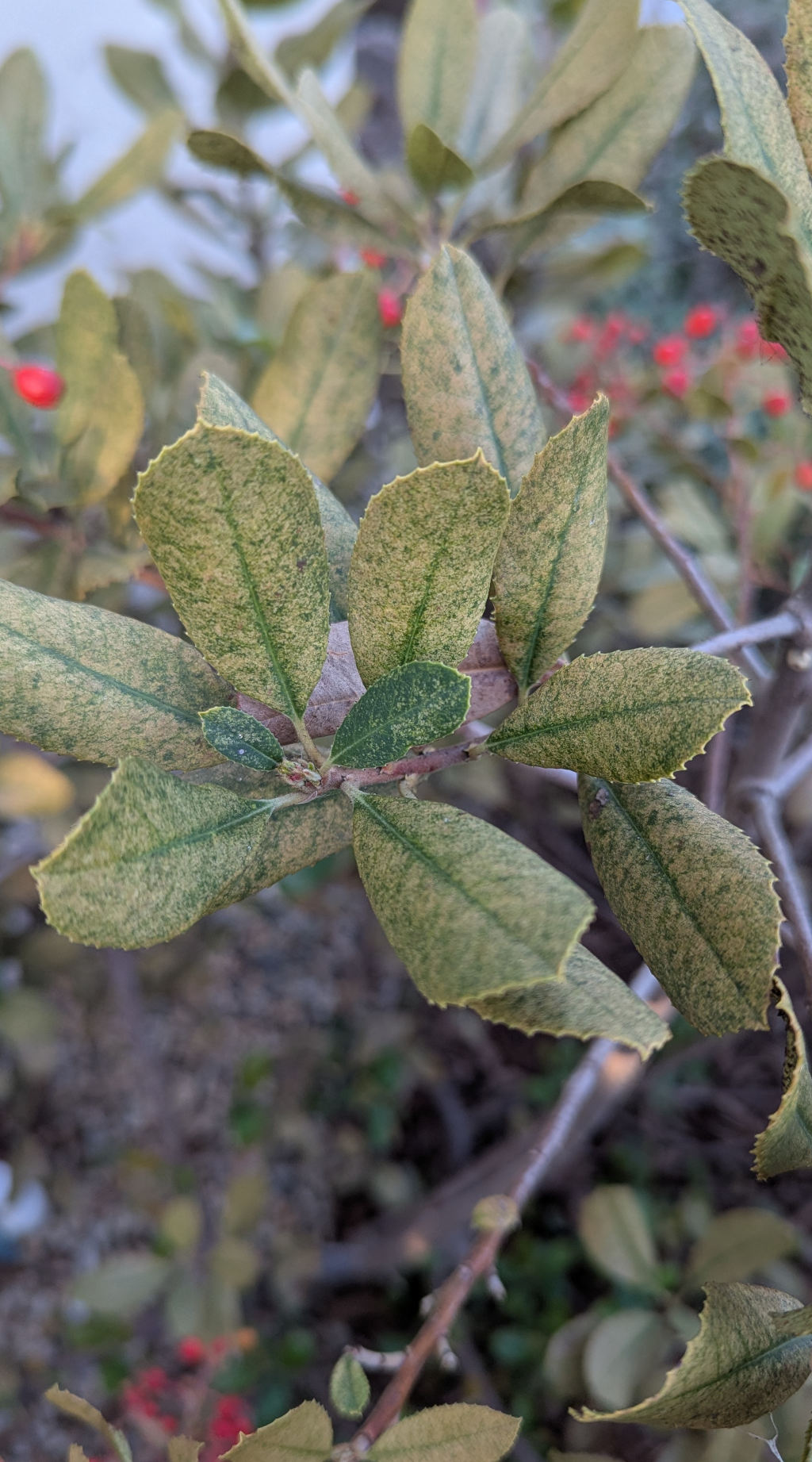
At first I assumed that the plant was just struggling a bit and I gave it a little more water, but when the plant didn't recover in a few weeks, I knew that something more serious was going on.
That's when I investigated for pests, and they were easy to find. The first damaged leaf that I turned over showed me some insects that I had never seen before.
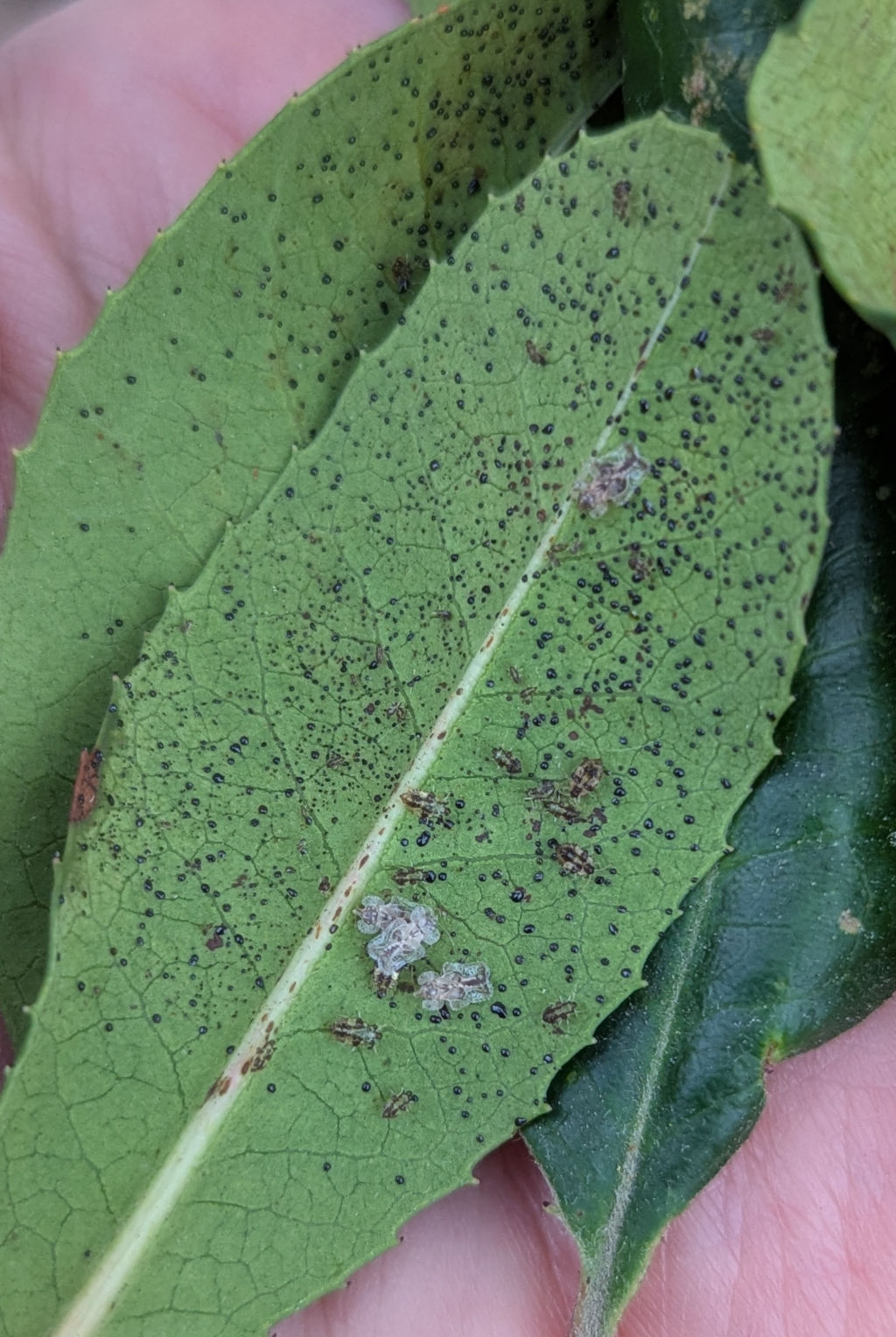
Like most people discovering an insect infestation, I was pretty frightened at first. Especially since I didn't recognize the pest at all.
So I started searching the internet to identify the culprit. I searched for Toyon pest insects, and for sucking insects of California natives, but all I found was the usual suspects. The internet showed me aphids, thrips, and scale, but I knew it wasn't any of those.
I finally turned to an app for identification. I don't remember exactly which app I used as I no longer have it on my phone, but it came up with the identification right away: lace bugs.
As a UC Master Gardener, I had seen most of the common garden pests, so I was curious about how this one had escaped me. It never came up in any of my training, and I've never heard anyone complain about damage from lace bugs. In fact, many people tend to think of the common garden predators lacewings whenever lace bugs are brought up.
It turns out that lace bugs are common garden pests all over the world. They are host-specific sucking insects, which means that each species of lace bug lives off of one species of plant. They put their mouth parts into the underside of the leaves and suck the sap out of the plant.
According to wikipedia, they are most easily identified by their enormous and elaborate wings.
They have 2 sets of wings; a pair of forewings and pronotum wings, which vary in size between individuals, typically having reduced forewings and larger pronotum wings. Despite their apparent beauty, the wings are highly decorative and adults are poor fliers, carrying out their sedentary lifestyle on leaves and the shoots of plants.
The reason that lace bugs are overlooked is that, even with severe infestations such as mine, they typically don't kill a plant. They might make it look a little rough for awhile, but, according to the internet, eventually the local predators will catch up to them and keep them in check.
Unfortunately, despite them being right next to my milkweed that is covered in ladybugs, the local predators don't seem to enjoy eating my lace bugs. So my Toyon lost nearly all its leaves this year and looked quite bare.
As for control measures, I'm now cleaning up the fallen leaves to prevent them from overwintering in the leaf litter. I'm also manually picking them off the plant, but it's impossible to pick them off of every leaf.
So for now I'm hoping to share my experience with you and spread the word about these overlooked garden pests. Hopefully the predators in my yard will catch up to them in 2026.