
Inviting wildlife into your yard means inviting ALL wildlife into your yard
I talk a lot about all the great aspects of native gardening. I talk about how native gardens require less care, support wildlife, and can be beautiful as well. But I'm guilty of a major sin of the native plant community: I rarely talk about the drawbacks of native gardening.
Today I want to talk about something that few native gardeners harp on: pests.
Like all gardeners, I struggle with pests in my garden. I'm very close to the city here in Willow Glen, CA, so I mostly deal with city pests. I have raccoons, ants, possums, and very rarely, coyotes. Today, however, I want to talk about rats, and how these pests are connected to the philosophies of native plant gardening.
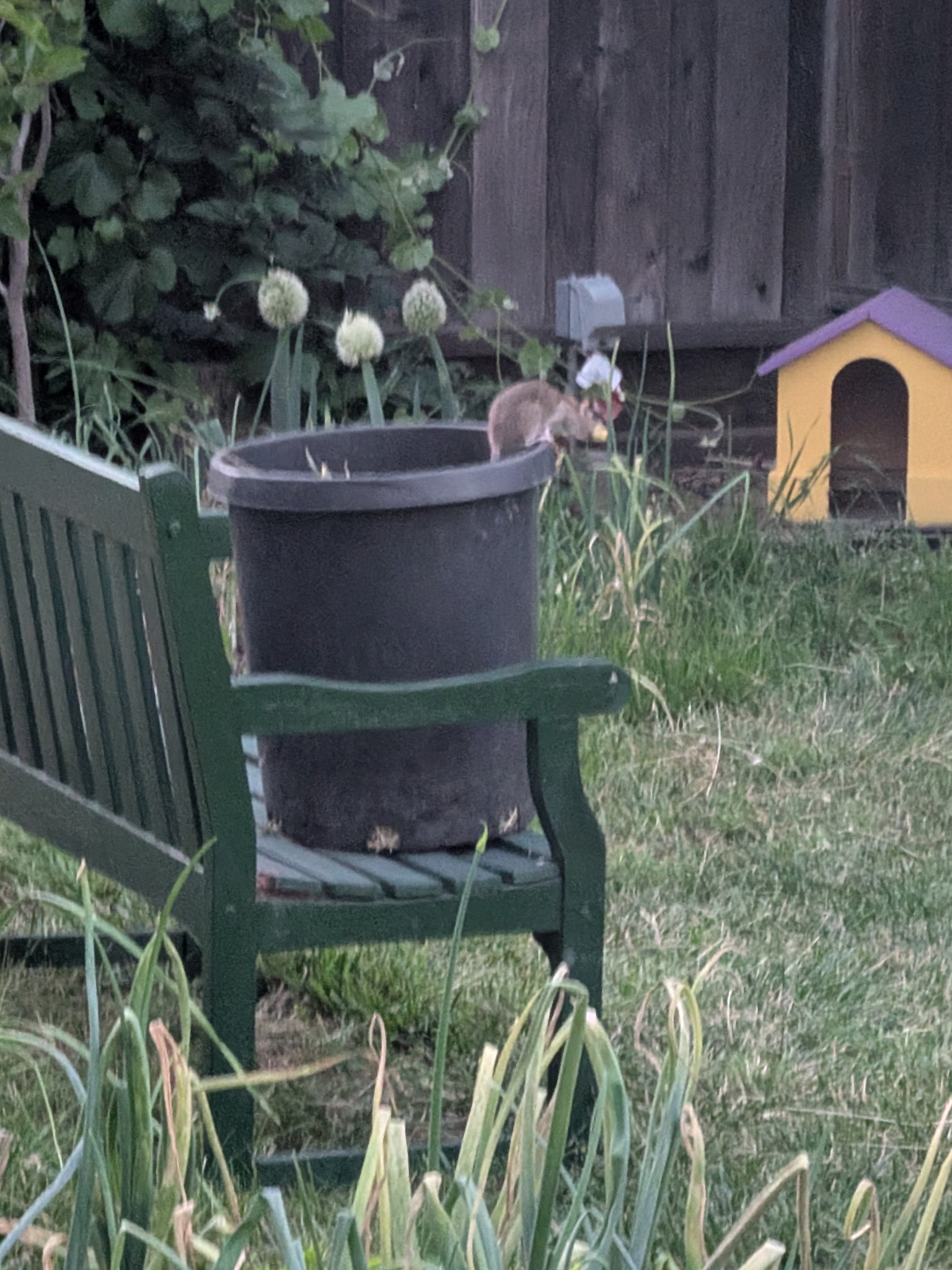
Here's a picture captured by my daughter, that shows our rat standing on top of my bin of yard clippings and food scraps. That bucket is about to go into the compost, but before I could get it there, he snuck in and grabbed a piece of food.
The problem with pests in native gardens is a result of gardening in a safe, clean, and sustainable way. When you garden without pesticides and other chemicals, you are making a very inviting place for the local wildlife. When you plant native flowers in your yard, you are inviting the local birds and pollinators into your yard.
And, as any native plant gardener will tell you, it's glorious to see wildlife in your own yard. I love looking out my front window to see a hummingbird dipping its beak into every flower on my bladderpod. I love seeing the local birds going for a dip in my bird bath. I love seeing the monarchs laying eggs on my milkweed.
But when you invite wildlife into your yard, you invite ALL wildlife into your yard. Life exists not as disconnected individuals, but as a collection of species that depend on each other in a vast and complex web. By making a place that is good for one species, you are actually making a space that is good for MANY species.
When I first stopped using pesticides and started planting native plants, I noticed increased insect activity. In the first year, I had a hard time with aphids. They proliferated rapidly and infested some of my plants. But by inviting nature into my yard, I also invited aphid predators into my yard. By the second year, the predators had found my yard as well. Predators like lady bugs ate enough of the aphids to mean that they were no longer a significant pest.
Still, aphids weren't the only critters that found our yard.
Other predators were less desirable in the yard. My daughters hated the spiders at first, but if you aren't spraying your yard with pesticides, then you are setting up a smorgasboard for the spiders. After a few years they have adjusted to seeing a spider now and then, but they still don't love them.
The ants have also been an issue. At times we've had to move our trash cans, and clean up thoroughly in order to prevent the ants from coming indoors. It has been a struggle.
But in my garden, the worst pest is the rats. It's so embarrassing when I'm showing someone my garden and then a rat runs by. This actually happened during the Growing Natives Garden Tour. I was talking to a visitor about the plants in my yard, when a rat ran right across the sidewalk to hide in one of my bushes. I was embarrassed and had to explain that when you invite nature into your yard, all of nature will want to join in the fun.
Rats are troublesome, too, because they are difficult to control. I have been setting up kill traps all over my yard for a few months now, and although I've captured three of them, and a local cat caught one, I still haven't caught them all. There's still at least one living in my yard.
The point of this post isn't that native gardens attract rats. All good gardens will attract rats, especially if you have a good compost pile. The point of this post is that native plant gardening isn't all sunshine and bliss. It's hard work.
When you invite wildlife into your yard, you will get the wildlife you want...
and you will also get some that you don't want.