
What happened when I implemented llms.txt?
I've been a blogger since the early 2000s because blogging is one of my favorite ways to express myself. I like the casual tone where I can share pretty much anything I'm creating at the moment or interested in writing about. So I'm pretty distressed with all the discussion online about how blogging is dead due to the rise of AI.
A month ago I gave into my fear and decided to add llms.txt to my website. This new text file at the site root is basically a sitemap for LLMs. It presents your blog posts in a markdown format that is easy for AI agents to ingest so that they can navigate your site. If people are going to use LLMs rather than search engines, then I want my blog posts to appear there as well.
But how did that change the performance of my blog? How did that change search traffic? How did it change site visitors? How did it change social sharing?
In this post I'm going to share the way traffic to my site changed in the first month since adding llms.txt, then I'm going to use those results to drive a discussion about whether blogging is actually dead or not.
Results of adding llms.txt
I added llms.txt to my static eleventy blog on October, 5, 2026. The pattern of traffic to my site changed almost immediately. Here's a screenshot from Google Search console that compares the first month of search traffic with llms.txt against the last month of search traffic with no llms.txt.
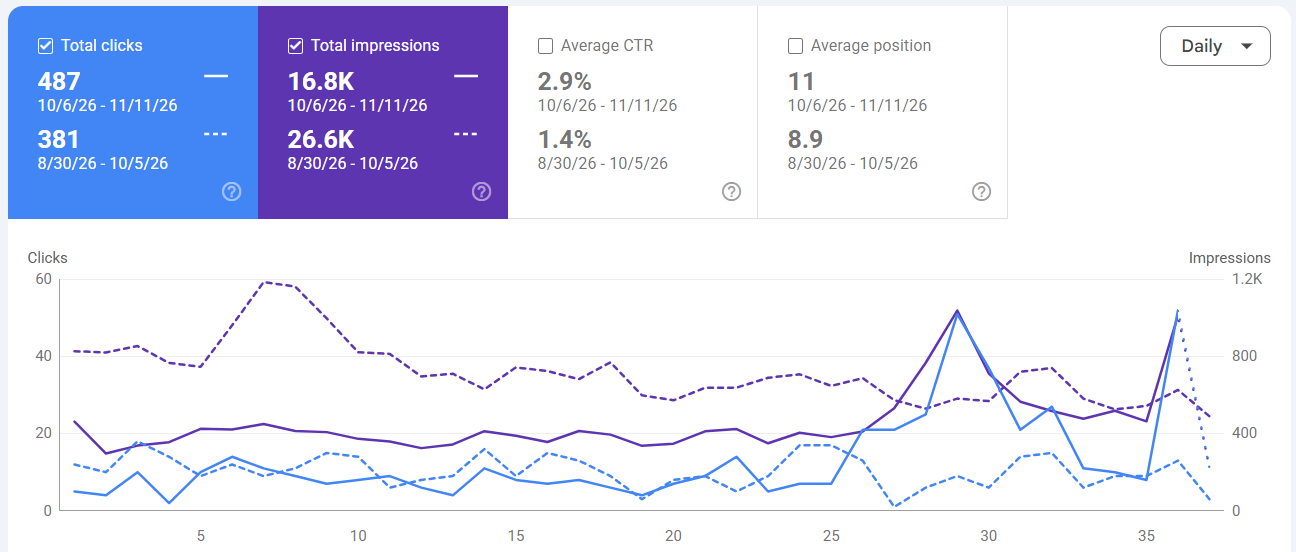
The results are crystal clear. Impressions went way down. Clicks went way up. In the month after adding llms.txt I had 16.8k search impressions, while in the month prior I had 26.6k search impressions. That's a huge change! I lost nearly 10k impressions because I added llms.txt! This may seem awful at first, but it's balanced out by a change in clicks. In the month since adding llms.txt I've had 487 clicks, while in the month prior I had only 381. This means I'm getting more visitors to my site even though I'm appearing in Google search results less frequently.
When we look at pageviews, the story is a little more confusing. Here's what Google Analytics shows for my pageviews.
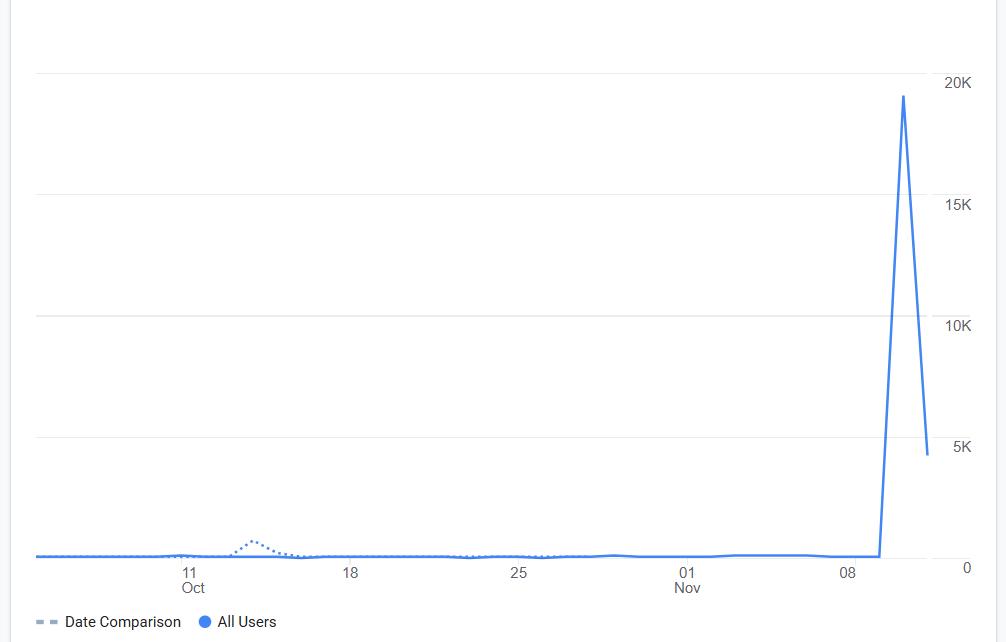
The lines before and after the change are difficult to read at this scale due to the spike at the end. The only significant difference is that there is a massive spike in pageviews later in the month after adding llms.txt. When we dig into the traffic source, we see that that is coming from social media.
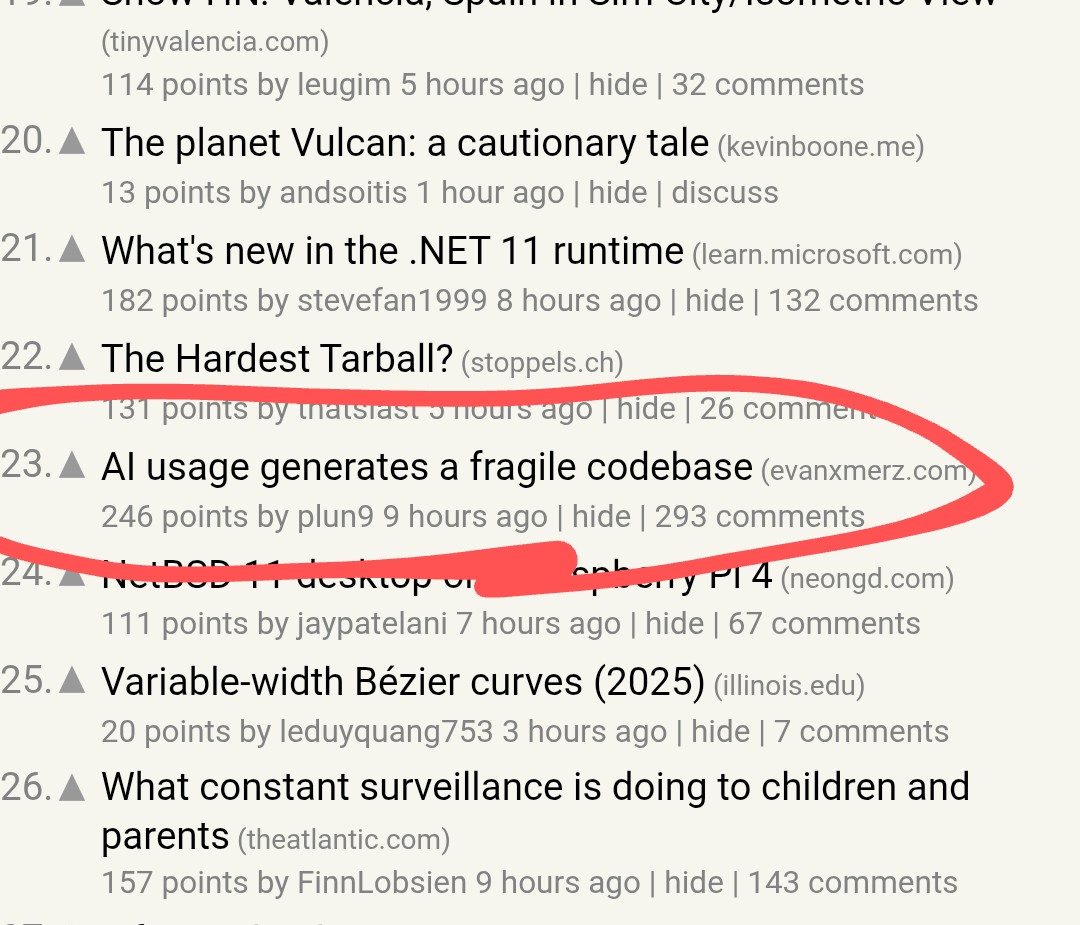
Well, it turns out that someone found one of my recent blog posts about the fragility of agentic codebases and shared it on Hacker News. In fact, one of my coworkers reached out to me to inform me that it was on the front page of Hacker News. The highest I saw it was link number 22, but I was pretty happy to see one of my articles gaining traction because that happens so rarely.
Blogging is even more important in the age of AI
The results of adding llms.txt to my site are pretty clear. After adding llms.txt my site saw more visitors from search and from social media. One of my posts went about as viral as a blog post can go. Adding llms.txt to my site has been a great boost to traffic.
It seems like a lot of people really are using AI chat to find content on the web. After all, I didn't share that blog post to Hacker News. Someone discovered it by chatting with AI, shared it to Hacker News, and then it climbed the ranks. That resulted in more traffic than my blog has seen in years.
So is blogging dead because people are using chat bots? No. Quite the opposite.
Chatbots need sources and references in order to be able to talk about anything. The sources that they need can't be generic, low quality AI slop. They need to find authoritative articles written by people with strong non-AI voices. In order for AI chatbots to present good answers to readers, AI chatbots have to be able to find good writers and leverage their writing in the response.
As long as the chatbots are citing sources, then this should result in increased traffic to the creators who are sharing good content on the internet. Chatbots are a net positive thing writers.
In fact, I think that AI is separating the wheat from the chaff. I think AI is putting a spotlight on the people who are making the highest quality content. Why is that?
People who don't like writing are now using AI to do their writing. They were never good writers, and their skills are decaying because they're offloading their work to AI. People who like writing are still writing by hand. They are still honing their craft. The difference between the two groups is growing more and more stark, and AI can see it. AI isn't linking to other AI slop. It's linking to the best work.
I don't think this is unique to writing either. I think we are seeing this happen in all fields impacted by AI. The bad programmers are becoming worse. The good programmers continue to separate from the pack. The lazy artists are generating slop with AI, while the most skilled artisans stand out even more.
In short, AI usage is a net benefit to those who really enjoy what they are doing. It's a net positive for my blog since adding llms.txt, and I suspect it's a net positive to any other creator who is doing high quality work.
The impacts on the lower end of the market are less clear, and may be less positive. The lowest paid art work is probably going to AI now. The lowest paid writing work is probably also going to AI. Is AI benefiting the people at the bottom? Probably not, but I don't have data that reflects that.
So for now I'm going to keep blogging. In fact, I'm going to redouble my efforts to bring traffic to my site using AI. I am glad that there is a new traffic source beyond search and social media.